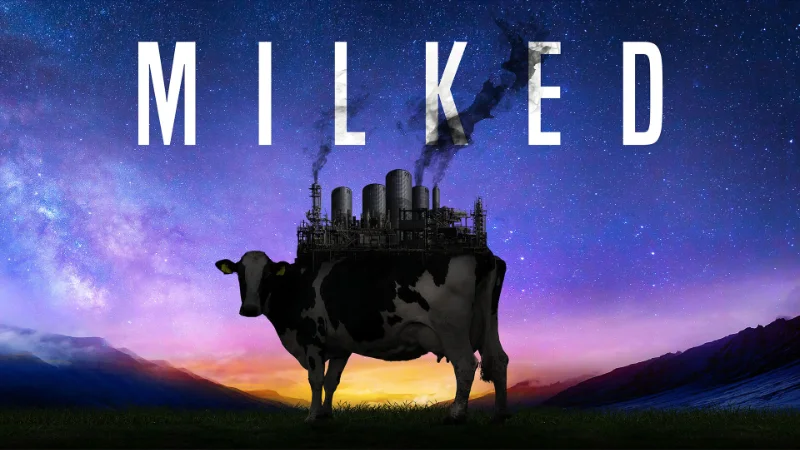
A new reception study of the documentary Milked finds that vegan advocacy films can inspire changes in consumption habits, but, in the same breadth, they can also prompt resentment and resistance among certain audiences.
The study was conducted by Nicolai Skiveren and draws on the findings from in-depth interviews with 25 people in Aotearoa New Zealand, including vegans, vegetarians, omnivores and professionals working in NZ’s domestic dairy industry – a sector that recent studies have associated with a range of environmental concerns.
Milked (2021) was directed by Amy Taylor and follows Māori activist Pere Huriwai-Seger as he investigates the environmental, animal-welfare and social impacts of Aotearoa New Zealand’s dairy industry. The documentary follows the somewhat formulaic framework of films like Cowspiracy and Seaspiracy, which combine investigative-journalistic storytelling with conspiratorial narratives to expose the hidden workings of industrial animal agriculture.

Pere Huriwai-Seger in Milked (2021).
What sets this study apart from similar research on the impact of the genre is its focus on how people working in the industry responded to this film, which directly challenges their profession and way of life, while also providing pathways for change. The findings suggest that, when using documentary media to communicate with audiences whose livelihoods are directly implicated by the narrative in question, it is possible that alternative narrative strategies might be more formative in opening spaces for dialogue and reflection, than those used in the genre today.
Where can I read it?
The study appears in Oxford Intersections which is a new interdisciplinary research publishing platform from Oxford University Press. This platform brings together large collections of peer-reviewed research organized around major global topics, from waste and pollution to artificial intelligence and race. The article features in the section titled Environmental Change and Human Experience, which examines changing relationships between people, environments and other animals across disciplines and timescales and is listed under the thematic cluster on Animals, edited by Professor Annie Potts with the Aotearoa New Zealand Human-Animal Studies centre at the University of Canterbury.
Finally, the research is also discussed in a recent episode of Knowing Animals, which is a free animal-studies podcast hosted by philosopher Josh Milburn.